
Batukada
The composition Batukada was born during a period of intense creativity and musical production in the life of Sonia Conde. During a stay of several months away from her usual surroundings, Sonia felt the need to explore new sounds and create something different, innovative, and out of the ordinary. It was while she was in Villahermosa, Tabasco, that she began a deep musical exploration and research process that ultimately gave rise to this work.
Little by little, rhythms, sounds, and musical combinations began to emerge that captured her attention because of their originality. What excited her most was the feeling that this music was unlike anything she had heard before. That sense of authenticity motivated her to continue developing and refining the piece until it became a unique contribution to her musical style.
The work had the opportunity to premiere on Televisa in Mexico City during a performance alongside the jazz group Blanco y Negro, a band of which Sonia Conde was a member. This important stage marked the beginning of Batukada’s public journey, and over time the composition has begun to gain popularity on digital platforms such as TikTok and other social media networks.
For Sonia Conde, it is deeply rewarding to see how this creation—born from inspiration, experimentation, and a passion for music—continues to reach new audiences and connect with people of different generations and from different places around the world.

Ven Mi Nino
The music for Ven Mi Niño originated from the musical adaptation of a poem written by the renowned poet Óscar Bonifaz Caballero. The text explores a deeply moving and sensitive subject: the story of children born with an extremely rare and delicate condition, commonly known as “Children Without Skin.” At the time the poem was written, medical advancements were still very limited, and cases like these were both shocking and difficult to comprehend, as the chances of survival were extremely low.
Moved by the emotional power of the poem, Óscar Bonifaz Caballero invited Sonia Conde to compose the music and create the arrangements for the work. Inspired by the sensitivity and depth of the text, Sonia developed a delicate Bossa Nova composition that beautifully conveys the tenderness, sorrow, and humanity found within each verse.
The result is a deeply emotional piece that has touched the hearts of audiences. Although the story behind the poem is profoundly sad, the musical interpretation creates a warm and reflective atmosphere that allows listeners to connect emotionally with its message. The music and arrangements created by Sonia Conde represent an artistic expression born from the deepest part of her musical sensitivity, honoring the beauty and depth of this remarkable poem.

Comitan
Comitán is originally a bolero composed by Roberto Cordero Citalán, a native of Tapachula, Chiapas. The song began to gain recognition around the 1940s and, over time, became a true local anthem for the people of Comitán and the greater Chiapas region.
Inspired by the cultural and historical significance of this composition, Sonia Conde felt compelled to reinterpret it and present it through a fresh musical perspective. While preserving the essence of the original song, she incorporated a Swing style accompanied by the sounds of the marimba—an iconic and traditional instrument of Chiapas—creating an elegant fusion of classic and contemporary musical elements.
This new version offers audiences another way to enjoy Comitán. In addition to the traditional bolero, listeners can now experience a modern interpretation featuring updated arrangements and a distinctive rhythm while maintaining the spirit and character of the original work. Through this adaptation, Sonia Conde sought to honor both the song itself and the rich musical heritage of Chiapas, bringing a fresh vision to the piece without losing respect for its origins.
In its early years, during the 1940s, the song was primarily performed by local residents in a simple and spontaneous manner, likely sung a cappella before more elaborate musical accompaniments emerged. As time passed, various musical groups began incorporating it into their repertoires, allowing entire generations to learn, appreciate, and preserve this beloved musical treasure.

Catazajá
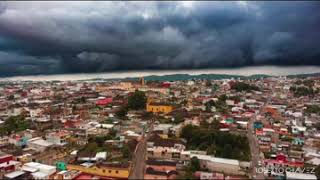
The song Catazajá is inspired by the beautiful place known as Las Playas de Catazajá, located in the state of Chiapas. In many communities and cities throughout Chiapas, there is a representative song that describes the essence of the place: its history, traditions, customs, cuisine, and natural beauty. However, Las Playas de Catazajá did not yet have a composition that identified it and highlighted its cultural and tourist richness.
That is when a person originally from the region wrote the lyrics and invited Sonia Conde to create the music. This is how the song was born, a piece dedicated to exalting the beauty and charm of this wonderful destination. The vocal interpretation was also performed by Sonia Conde.
The video brings together impressive images of the area, showing its beautiful sunrises and sunsets, as well as the richness of its traditional cuisine. The purpose of this production is to promote tourism in Las Playas de Catazajá and invite more people to discover and enjoy its landscapes, culture, and the warmth of its people.
Un Mundo Mejor
The song Un Mundo Mejor, written by Sonia Conde, was born from a deep reflection on the attitudes and behaviors that begin to appear among children from an early age. Inspired by her experiences and observations within the school environment, Sonia noticed how many young children reflect at school the emotional and social difficulties they experience at home, such as violence, mistreatment, and a lack of positive values.
During moments of recess and social interaction, while the children played and shared their food, she was able to observe behaviors marked by inequality, envy, and negative attitudes that affect the way classmates relate to one another. These experiences gave rise to a composition with a message of awareness, empathy, and hope.
Un Mundo Mejor seeks to promote values such as respect, friendship, equality, and healthy relationships among boys and girls, encouraging more positive and harmonious environments from childhood. Through this song, Sonia Conde conveys the importance of building relationships based on affection, understanding, and mutual support, with the hope of contributing to the formation of a more humane and compassionate society.

Canción
The poem Canción by Rosario Castellanos is inspired by memories of her childhood and reflects the sensitivity and depth that characterize her literary work. The poetic language used by Rosario Castellanos can sometimes be complex and rich in symbolism; however, it was precisely that literary beauty that awakened in Sonia Conde the desire to set one of her poems to music.
Although much of Rosario Castellanos’ poetry consists of lengthy texts, which can make musical adaptation challenging, Sonia found Canción to be the ideal poem, especially because of its brevity and delicacy. Inspired by verses such as, “Yesterday, when I was born, someone placed a branch of myrtle in my cradle…,” Sonia created a musical interpretation filled with sensitivity and emotion.
To enrich the piece and give it greater musical depth, the artist decided to repeat the poem twice within the interpretation, while also incorporating arrangements and background vocals that complement the essence of the original work. The result has been a song greatly appreciated by audiences, to the point that it has been requested for various events and special presentations.
Alex Hiram Morales Torres
This interview was conducted by Alex Hiram Morales Torres, a correspondent for a media outlet in Chiapas, on the occasion of the tribute Sonia Conde would receive from the cultural organization known as Puente Cultural. This important artistic institution in Comitán, directed by Arbey Rivera, is distinguished by its broad and inclusive vision of culture, bringing together poets, writers, artisans, dancers, and musicians from different regions and countries to participate in its cultural activities.
The tributes organized by Puente Cultural usually take place over several days and include a wide variety of activities in schools, parks, and public spaces. Their purpose is to bring the community closer to the life and work of the honorees, allowing new generations to learn about their artistic, cultural, and human contributions. These celebrations also encourage cultural exchange through the participation of national and international guests.
For Sonia Conde, this experience represented one of the most meaningful moments of her artistic career. During the tribute activities, she had the opportunity to visit several educational institutions and share with students, teachers, and the general public. One of the most emotional moments occurred when a friend performed a song composed by Sonia during her high school years, bringing back memories and emotions that had remained tucked away over time.
The interview covers both the details of this cultural recognition and Sonia Conde’s musical career. It also explores the work she carries out through her music academy, where she teaches classes and workshops focused on the artistic development of children, young people, and adults. Throughout the conversation, she shares her vision of music education, the importance of nurturing artistic sensitivity, and the role of music as a tool for personal and cultural growth.
Alejandra Laguna
This interview was conducted by Alejandra Laguna as part of a project dedicated to highlighting the career and contributions of several outstanding figures from the city of Comitán. Within this initiative, Alejandra kindly included Sonia Conde among the selected individuals, a recognition for which Sonia is deeply grateful.
The conversation took place at her music academy, a space that has been essential to her work as a teacher and promoter of the arts. Throughout the interview, Sonia shares details about her work with children, young people, and adults, her experience in music education, and the philosophy that has guided her professional career for many years.
In addition to discussing her work at the academy, the conversation also explores important stages of her professional life, including her experience in the field of education during her time working at the preschool level. Sonia reflects on her calling as a teacher, the values she seeks to pass on to her students, and the impact that music can have on the complete development of a person.
The interview also offers a closer look at her artistic career, her performances at social events, and the projects she has developed over time. More than a simple conversation, it becomes a journey through her story, her motivations, her achievements, and the vision that continues to inspire her to share music as a tool for growth, expression, and human transformation.
As part of the series dedicated to outstanding figures from Comitán, this interview offers a deeper understanding of the woman, the teacher, and the artist behind a career built with passion, commitment, and love for culture.
Auditorio Roberto Cordero Citalan
Evento - Abril 11-13, 2019
Radio Interview – “For a Better Life” Program
On May 21, 2026, the distinguished pianist, composer, arranger, and singer Sonia Conde was invited to the program “For a Better Life,” broadcast by Radio 89.7 FM in Santo Tomé, Santa Fe, Argentina.
The interview was conducted by Mario Clavijo and Graciela Allovati, who expressed their admiration for Sonia’s artistic career, highlighting her talent as a performer, the sensitivity of her compositions, and the quality of her musical arrangements.
During the conversation, Sonia shared experiences from her career, her passion for music, and the creative process that has brought much of her work to life, captivating the audience with her story and dedication to the art of music.